Blog

  • Peeking over the Horizon

    When trying to imagine what’s possible how can we look beyond what we can already see on the horizon?

    Yesterday I ran a workshop on Peeking over the Horizon as part of the Making London event at the University of Greenwich. The event invited participants interested in “making London a city where arts and innovation can continue to thrive” to take part in “a day of inspiring presentations and engaging workshops on how to make London better“. The theme of the day was to: “rethink the relationship between markets and communities in London. Do you have a different vision of work and life in London, of its communities and businesses? Do you have a project, problem or question you would like some time and some tools to explore? Do you just want some new ideas? ‘Making London’ is a day of workshops for designers and non-designers, to help rethink and remake our experience of London.

    The workshop I devised aimed to encourage the participants to stretch their imaginations beyond what we can see on the horizon now; to think through potential impacts and consequences, to anticipate next directions and emergent themes and to aim at some uncommon insight into the kinds of creative and socially innovative interventions that could be possible. I cited our Urban Tapestries project as a model for this kind of critical and creative projection, specifically because I have recently reviewed the project’s final report (which was published 10 years ago in June 2005) to see how our ideas and policy proposals have held up.

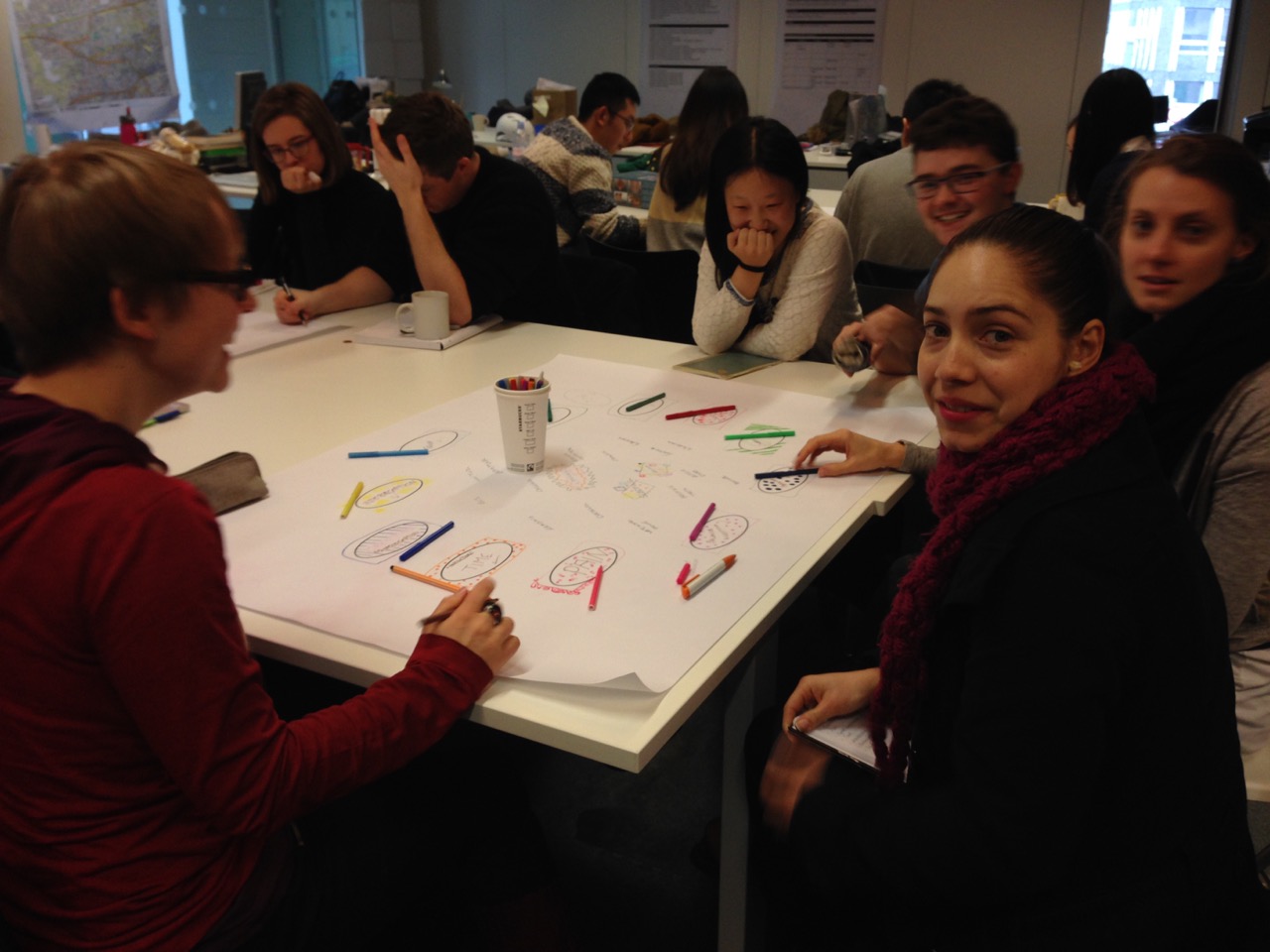
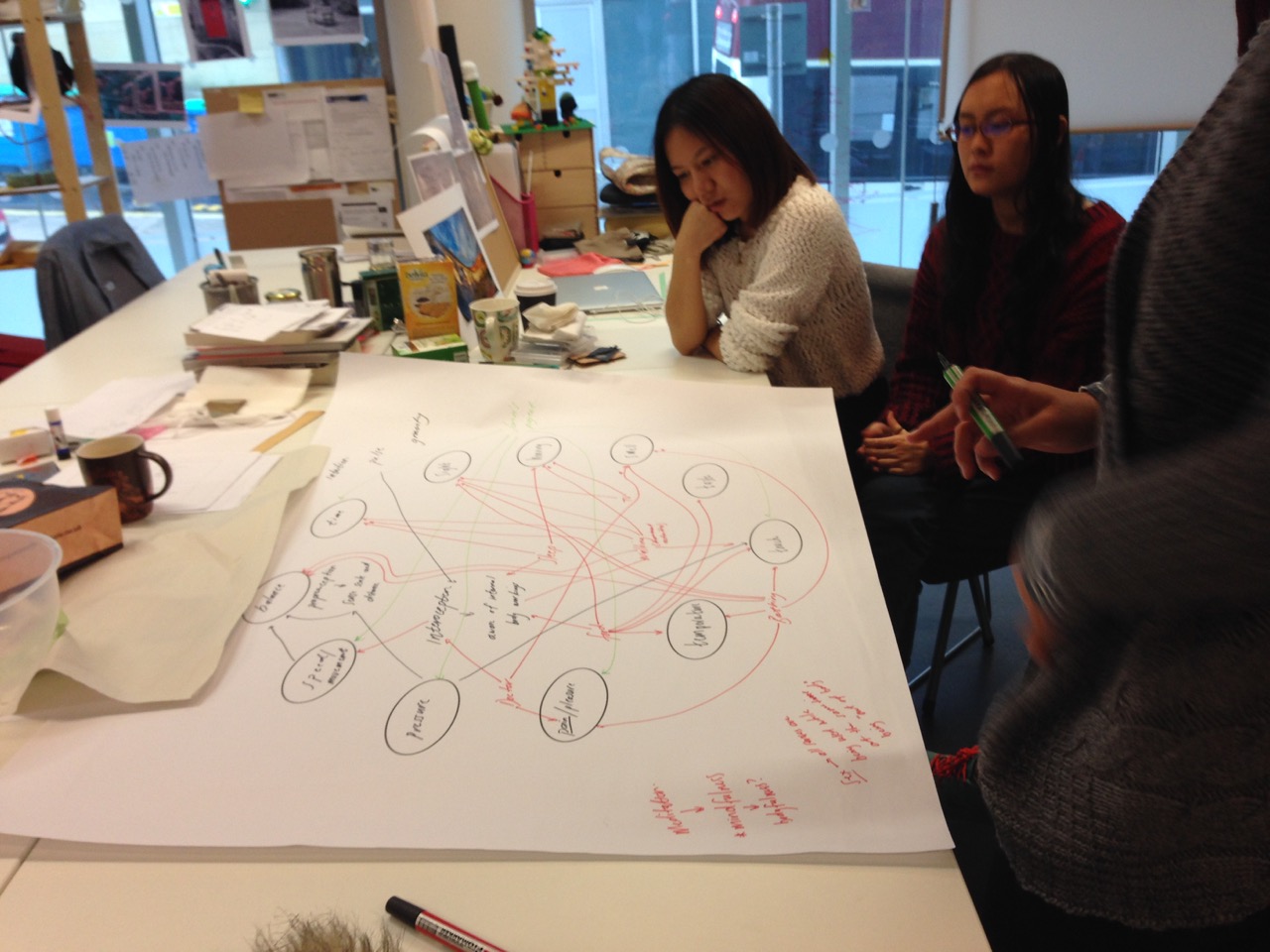
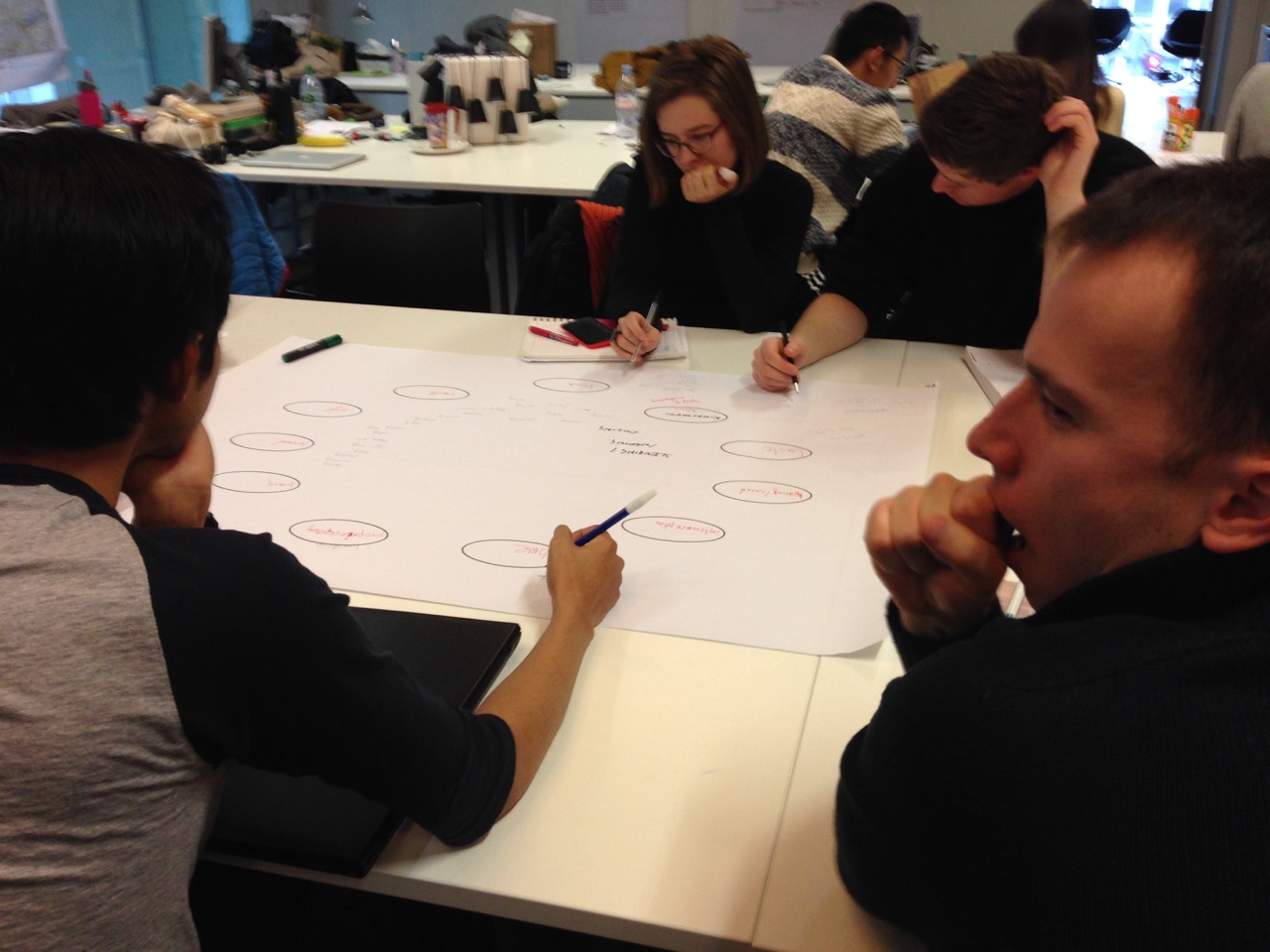
    In the first part of the workshop we used some large worksheets to address the event’s theme along a series of 6 vectors : heath and wellbeing; transport; work and leisure; housing; social behaviour; and communications. The exercise asks participants to identify current outliers : i.e. things which are causing change but which we do not yet understand the impact of. From there the next stage is to think through the potential impact these outliers may have and anticipate future directions that could result from them. At the confluence of these vectors the participants were asked to identify emergent themes.

    In the second part of the workshop I introduced 15 critical concepts that underpin the way our our modern developed world functions : algorithms, chains, contingency, corridors, efficiency, energy, infrastructure, labour, logistics, parameters, protocols, standards, waste and zones. These were offered as specific lenses which we could apply to the previous exercise’s emergent themes. The concepts were inspired by those used in the Logistical Worlds research project. Each participant used a StoryCube to select up to 6 of the concepts and marry them up with the themes to distill their ideas. The resulting cubes could then be used individually or together to generate more ideas on the large map of London which the event hosts were using to coalesce outputs from the different workshops of the day on.

    I was very pleased with the level and depth of conversations that the workshop provoked, participants told me it was challenging and rigorous, and that the way it helped to focus ideas and then make them transportable (via the StoryCubes) was inspiring.

    Further Iterations
    If you’d like me to deliver or adapt this workshop for other groups (academic, cultural or corporate) please contact me for prices and bookings. The workshop takes about 2 hours for groups of 10 to 30, is suitable for a range of abilities and levels of expertise.

  • Creative Chrysalis

    Do not follow where the path may lead.
    Go, instead, where there is no path and leave a trail.
    – Ralph Waldo Emerson

    Just a few days after I returned from Australia and Papua New Guinea at the end of March I heard that I’d been shortlisted for a Wellcome Trust Engagement Fellowship. In between re-adjusting to everyday life back in the urban developed first world (from being in a remote village on PNG’s Rai Coast) – I suddenly found myself having to consider two critical questions in fine detail : what, ideally, would I like to do with such a fellowship and the resources it offers; and, how would this be a step-change in my career that would propel me towards a different future?

    Its not often that such open-ended opportunities come up – where the constraint is truly on the scope and scale of your aspiration and imagination rather than on the project itself. The brief for the fellowships is refreshingly open – but terrifyingly so! In answering this challenge it is essential to step off the treadmill of routines, to turn aside from the path you are following – blindly or otherwise; to stop and survey the whole landscape of your life from as many perspectives as possible.

    There followed a month of close scrutiny of myself and my ambitions, of reviewing the period of change that I initiated at the beginning of 2014 and how this has been a slow transformation as I have unwound habits, patterns of behaviour, settled beliefs and practices. After focusing my energies on creating, building and sustaining an organisation for nearly 20 years, the past couple of years have involved a tumultuous reorientation that has invoked feelings of relief and release, emptiness and the desire to cling on. It feels very much as though I have been cocooned in a kind of creative chrysalis – effecting a slow transformation as I try to reimagine what kind of work I want to do, what kind of communities I wish to be part of and what I want to achieve. This process is by no means complete. But in preparing, writing and editing my proposal for the fellowship I have been forced to reconsider how different routes to those I have taken before might now offer me the step change in developing my aspirations that is clearly required.

    Emerson’s oft-quoted saying (above) has, perhaps, been emblematic of the path I have been making over the last 25 years, weaving a collaborative trail through disciplines and sectors that most likely seems random and confused to those who encounter my work through individual projects and do not see the long term trajectory. But there comes a time when its necessary to consider stepping off the idiosyncratic trail you have been creating yourself to be able to perceive new kinds of opportunities. There are moments when it becomes important to see that doggedly pursuing your own individual course and modus operandi can be as constraining as following a channel laid out by others before you. Recognising where your personal trail intersects with a larger trail and allowing yourself to be drawn along; merging your effort with that of others. For a while; or perhaps longer.

    Having submitted my proposal a few weeks ago I am now in the strange limbo of waiting to hear whether or not I will make it to the next round of interviews. The trick will be maintaining my resolve to pursue this new trajectory irrespective of the outcome of the selection procedure for these fellowships. Attuning myself to a new beat without reverting to older rhythms. I have written before about my ethic of trying to stimulate public agency in my work (here) and on the nature of pioneering as a way of life rather than a career choice (here). The habit of dissenting, the role of the outsider, is as much a self-selecting, self-limiting groove to become funnelled in as any other. It is time for a different suppleness of character to take hold, to bend as the reed in the wind without becoming like the gnarled and hardened oak. I think that the aim of this creative chrysalis of the past couple of years is to emerge out of the cocoon of self-reflection with a different form and to leave out-dated habits in the dry husk that remains.

    THE OAK TREE AND THE REED
    A story about a reed and an oak, urging us not to rely on strength.
    A reed got into an argument with an oak tree. The oak tree marvelled at her own strength, boasting that she could stand her own in a battle against the winds. Meanwhile, she condemned the reed for being weak, since he was naturally inclined to yield to every breeze. The wind then began to blow very fiercely. The oak tree was torn up by her roots and toppled over, while the reed was left bent but unharmed.
    Those who adapt to the times will emerge unscathed.
    Aesop’s FablesA new translation by Laura Gibbs. Oxford University Press (World’s Classics): Oxford, 2002

  • Magna Carta 800

    Magna Carta 800

    800 years ago on June 19th 1215 King John was forced, by Archbishop Stephan Langton and a group of barons, to sign the Magna Carta – a document setting out limits to the king’s power and guaranteeing the pre-eminence of the rule of law over the executive. John almost immediately repudiated it, but over the next 80 years or so it was re-issued several times, with the 1297 version extending the freedoms it offered to free men across the land. Alongside Magna Carta (and the 1217 Charter of the Forest, or Little Charter) the 13th Century in England featured the calling of the first English Parliament and with it the establishment of the foundations of modern democracy and a just and fair society.

    To celebrate the events at Runnymede on 19th June 1215, I am selecting a series of manifestos and texts written over the centuries that build upon the Magna Carta’s legacy in their own period of history. Each month, from January to June 2015,  I will juxtapose two or more texts in a book made with and shared on bookleteer (and distributed as physical copies to subscribers of the Periodical) as a way of reflecting that, across the generations, the quest continues apace for a fair and just society in which the rights and responsibilities of individuals are respected and upheld without prejudice. By re-presenting these ideas in a series of books I hope others can also draw inspiration from them and help frame the questions and challenges that face both the UK and other countries in the time ahead of us.

    I’m particularly keen to shine a light on ideas and writings from periods such as the mid-17th Century that have inspired me in developing my own sense of what a just and fair society might be like and how it could function. There is much we can learn today from those called Levellers and Diggers – what they sought then has resonated across the centuries and still seems so relevant in our own time. Perhaps we are seeing history repeat itself : then, a chance was missed during the Interregnum (or Commonwealth) for a new kind of society to emerge that could have swept away inherited privilege and arbitrary exploitation of the poor and landless. Instead, the power of the City, landowners and merchants usurped the dominance of king and nobility. Now, over three hundred years later we are seeing the Welfare State – a kind of postwar commonwealth – being dismantled by a similar nexus of wealth and privilege. This process goes hand in hand with the rapacious exploitation of the natural world, subtly reinforced even among environmentalists by the placing of money values on natural ‘resources’ as an argument for their protection from extraction. In this way, every relationship humans have to each other or to the ecologies we live within are divorced from context and connection with the flow of life – anything which could bind us to people and place in ways other than can be defined by money. By elevating money as the paramount value, we are isolating ourselves from each other, from inherent rights and from any sense that we have intrinsic responsibilities and obligations to others and the world we live in.

    I’ve begun the series with a book containing two texts written roughly two hundred years apart, at the apogee of two great moments of change in the UK – the English Civil Wars and the Chartist movement. Both sought radical change to the status quo of how the country was governed, laying crucial foundations for the development of our modern parliamentary democracy and for a just and fair society based on individual rights and responsibilities. That both were rejected by those in power in their own times is a reminder that each generation must continue to strive for its own version of a just and fair society. These texts serve as an inspiration for us now to continue to question and challenge the Powers That Be – to reject their surveillance state, their dismantling of the Welfare State, their greedy pilfering of the commonwealth for their own private gain. And to remind ourselves that, across the centuries, others have stood firm against tyranny whatever form it takes.

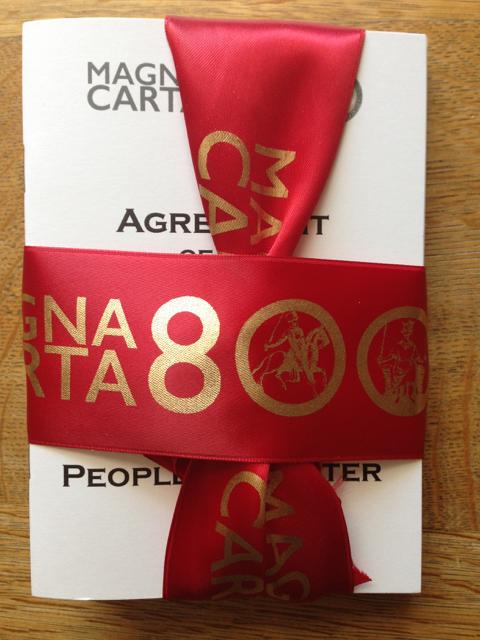
    If you’d like to receive the physical versions of the books, please subscribe to the Periodical here. And there’s now a special limited edition (40 sets only) bound together with a red satin ribbon, buy your’s here.
    You can, of course, also read each book for free, either online in their book reader versions or if you download, print out and make up the handmade versions – just visit bookleteer and browse the collection.

  • Embodying Data Workshop

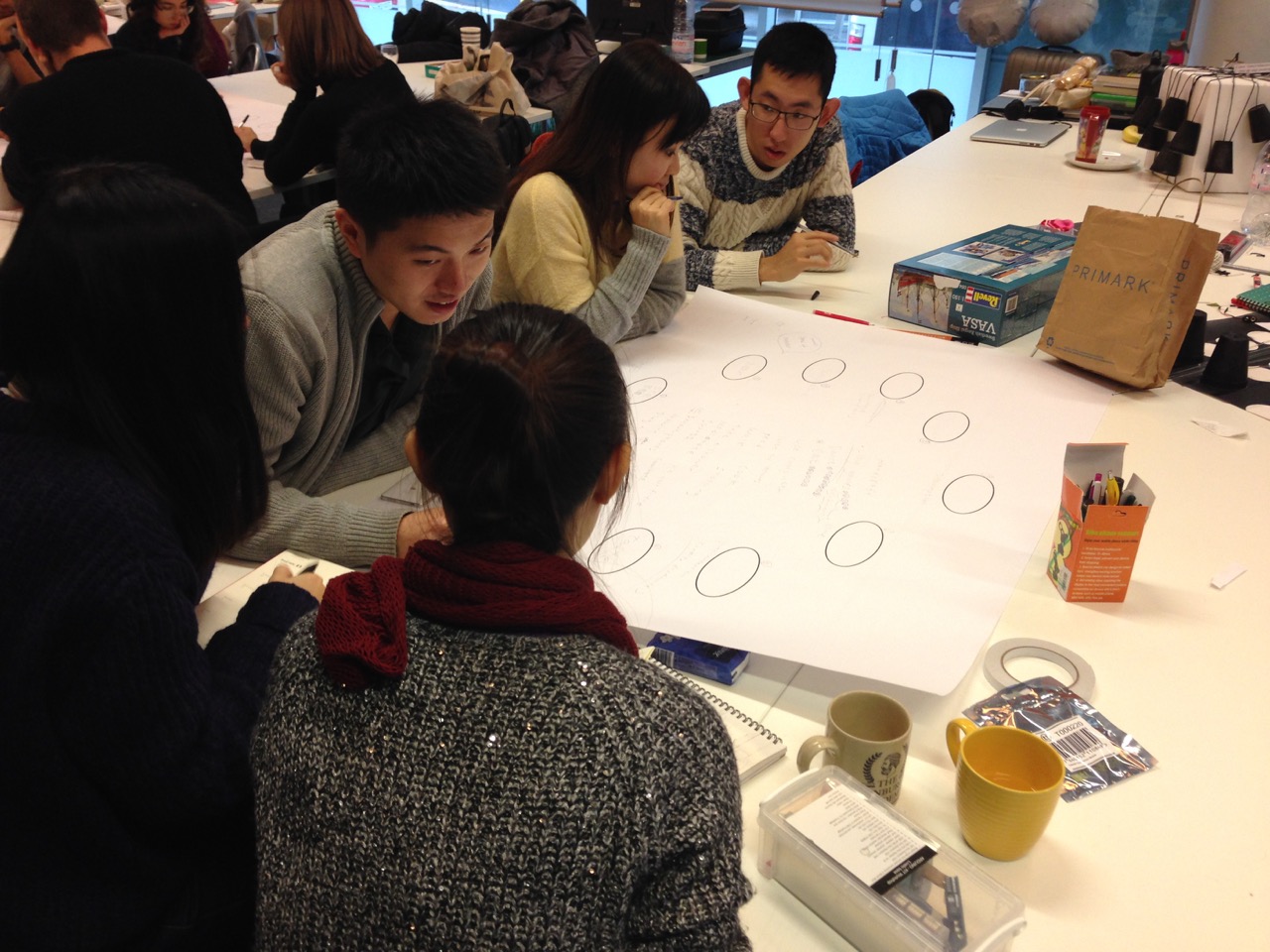
    Last week I was in Edinburgh to run my co-discovery Embodying Data Workshop with 24 of Chris Speed‘s Design Informatics Masters students at the Art College. The workshop was devised a few months ago as part of my Creativeworks residency at Birkbeck College to introduce computer scientists to the possibilities of approaching the problem of data analysis and computation differently by manifesting data in tangible ways. Thus we may bring more of our human senses to bear on meaning making than merely relying, almost exclusively, on vision and hearing as with standard data visualisation techniques.

    It is a hands-on workshop using paper-prototyping methods to explore manifesting data as physical objects – why would we do this? what sort of objects? how could it benefit data analysis and computation methods? – and is an opportunity to speculate on how we might discover new ways to generate insights into complex data sets to discern previously undetected patterns and make meaning.

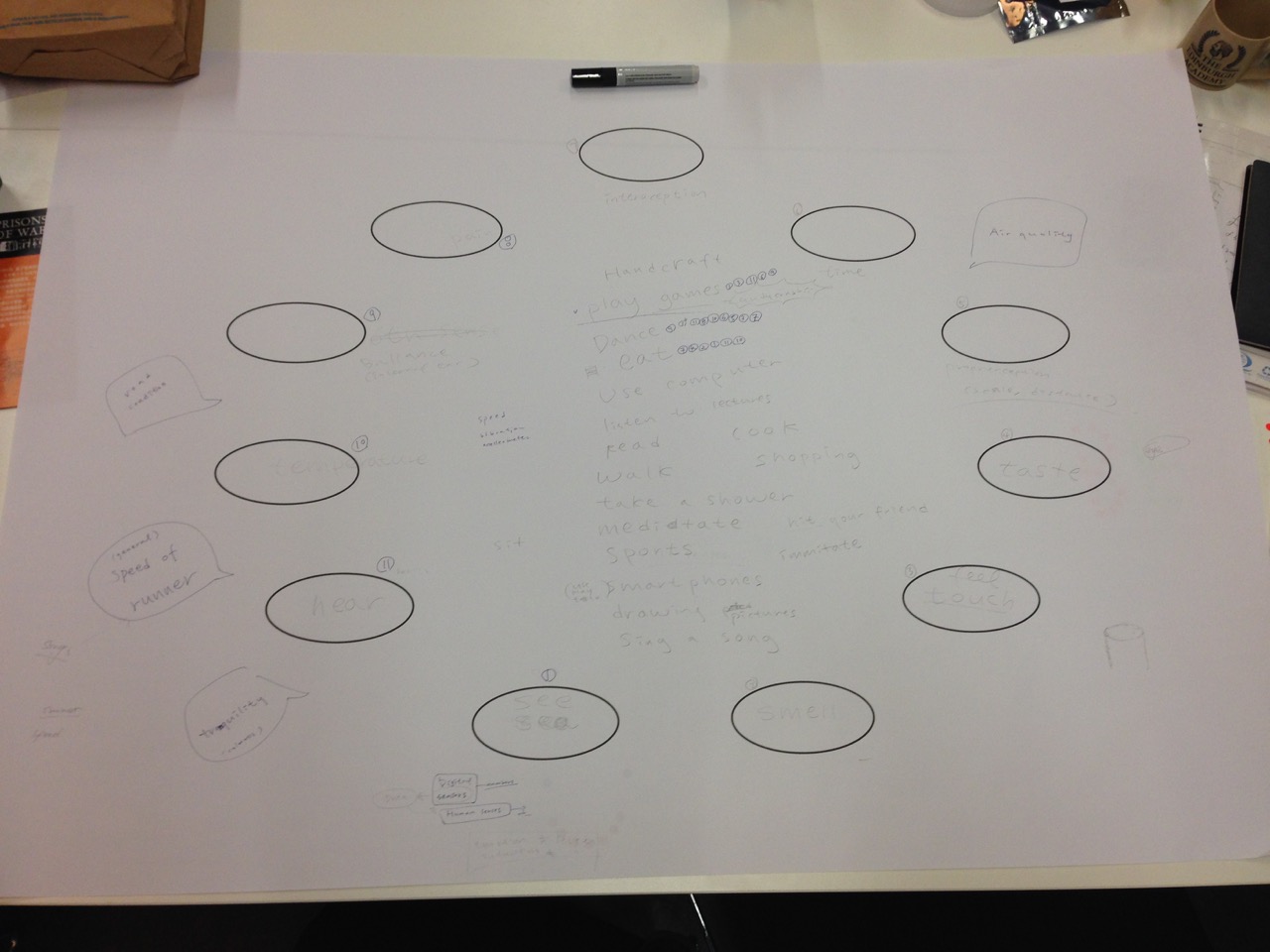
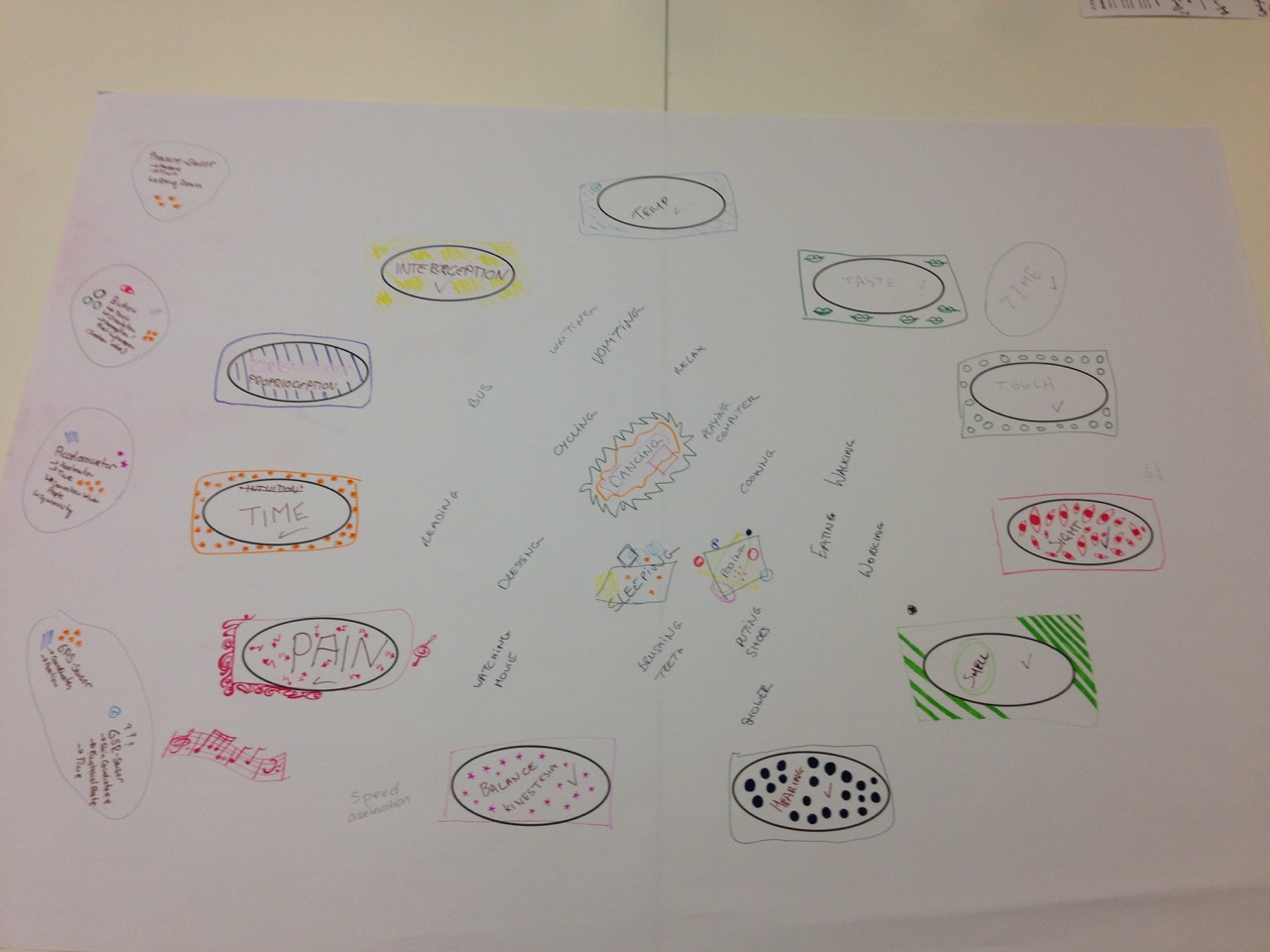
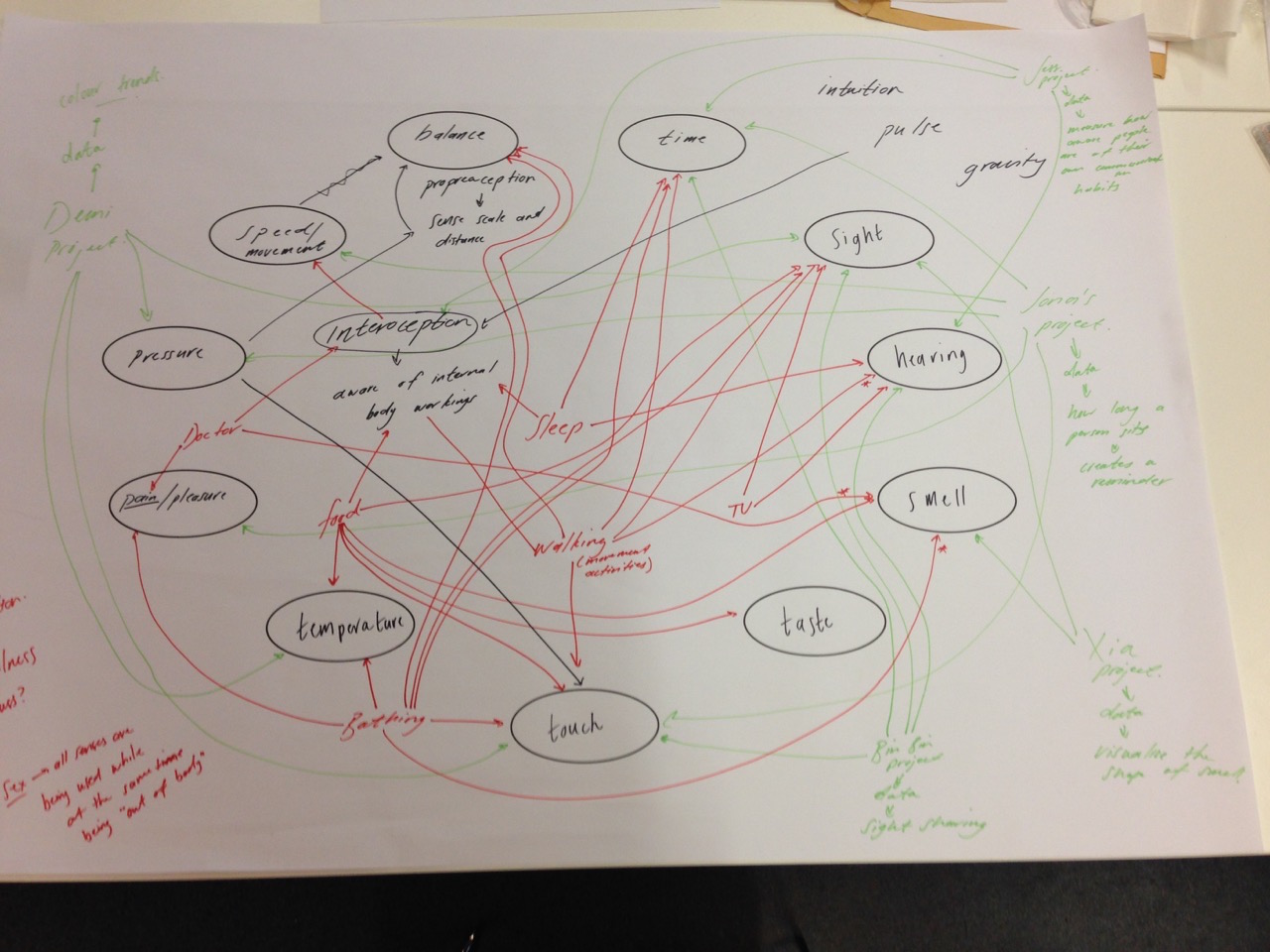
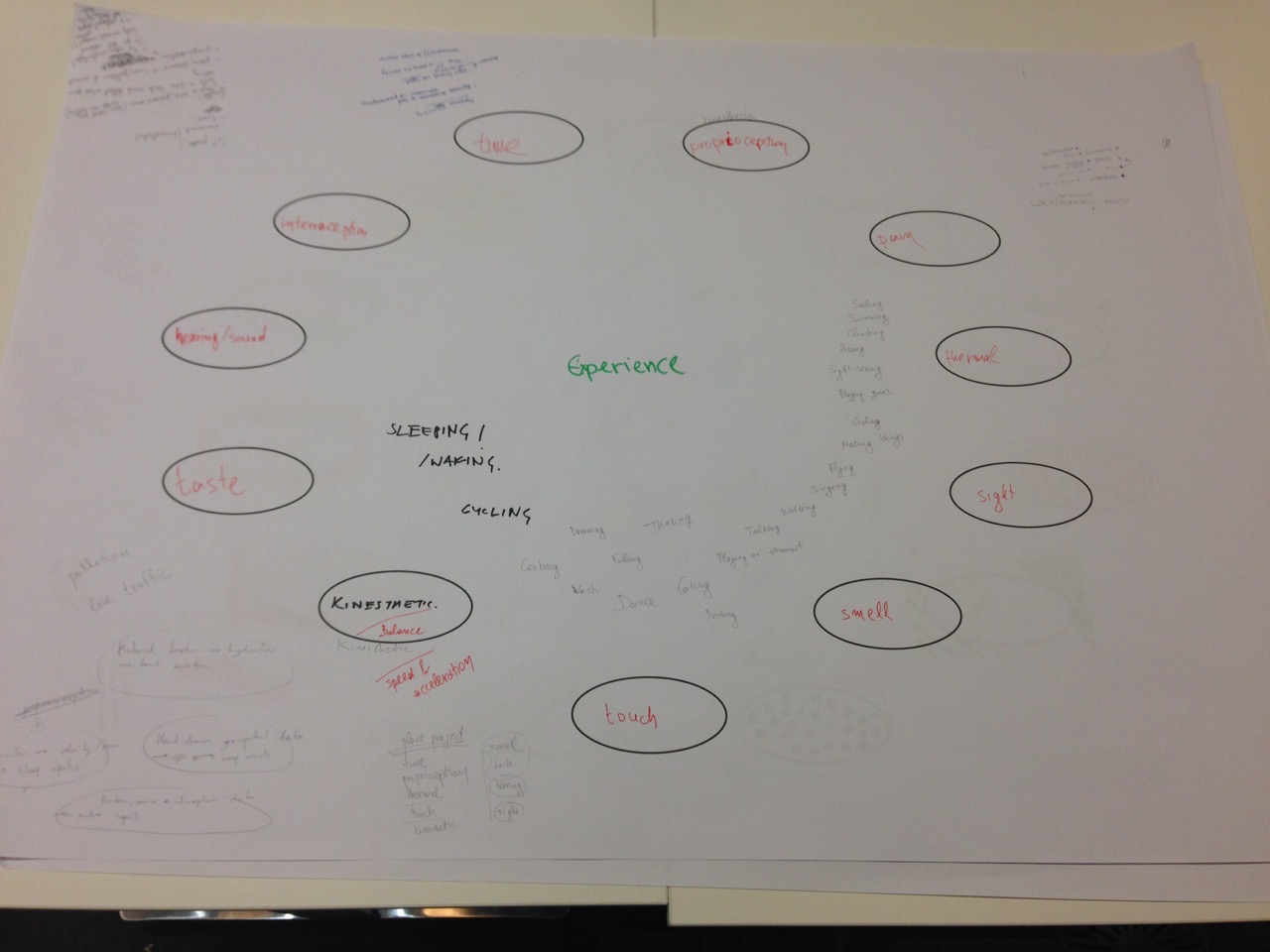
    The workshop starts off by engaging the participants in identifying 11 major human senses (touch, taste, smell, sight, hearing, temperature, balance, pain, time, proprioception and interception) and discussing other sensory factors. Then we begin to map how many senses we actually use in everyday activities and tasks. In this way it becomes apparent how reliant we are on multiples senses to interpret our experiences of the world around us. How much then are we missing in trying to analyse data using just our visual and occasionally auditory senses? What patterns might also exist that we are simply not able to perceive because the senses that would detect them are not being activated? The last part of this exercise asks the participants to think about data sources and types, such as different kinds of sensors or data feeds/streams as well as the kinds of data coming through – energy use, health, environmental, sales, traffic, communications etc. We then follow on by mapping how we might interrogate such data using additional senses to sight and sound. What benefits might we get from having new ways to explore big and complex data sets? What could happen when we take digital data out of the machine and into the physical world?

    IMG_2891 IMG_2892 IMG_2893 IMG_2894

    IMG_2902 IMG_2903 IMG_2904 IMG_2905

    This exercise is followed by a short presentation on Proboscis’ Lifestreams project: how and why we developed the life charms from biosensor data and what implications we believe it has for creating new insights into health and fitness data for wellbeing. Lifestreams provides both an actual context and talking point to discuss the difference that embodying data in the physical world – making it tangible to the senses – could have.

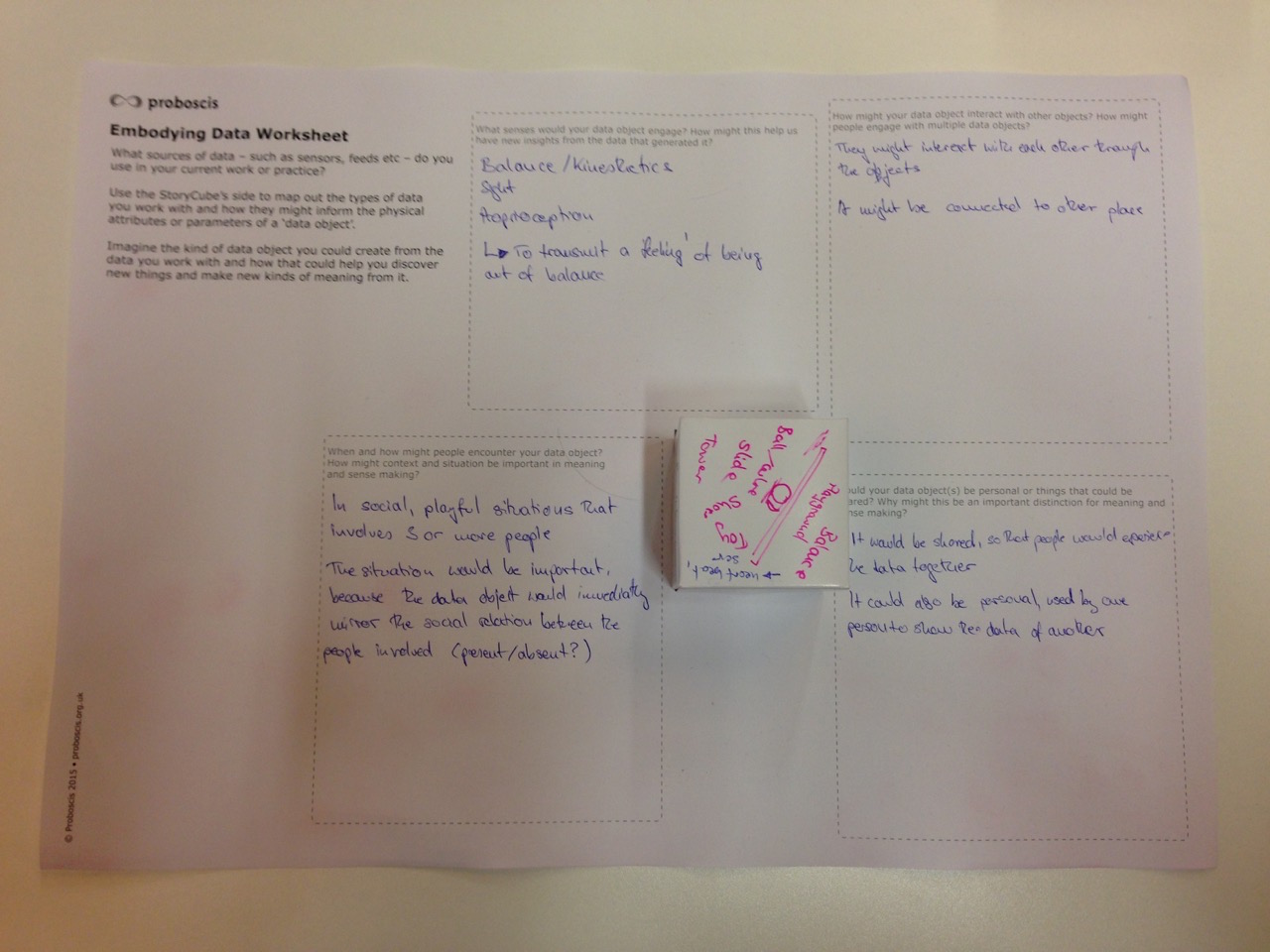
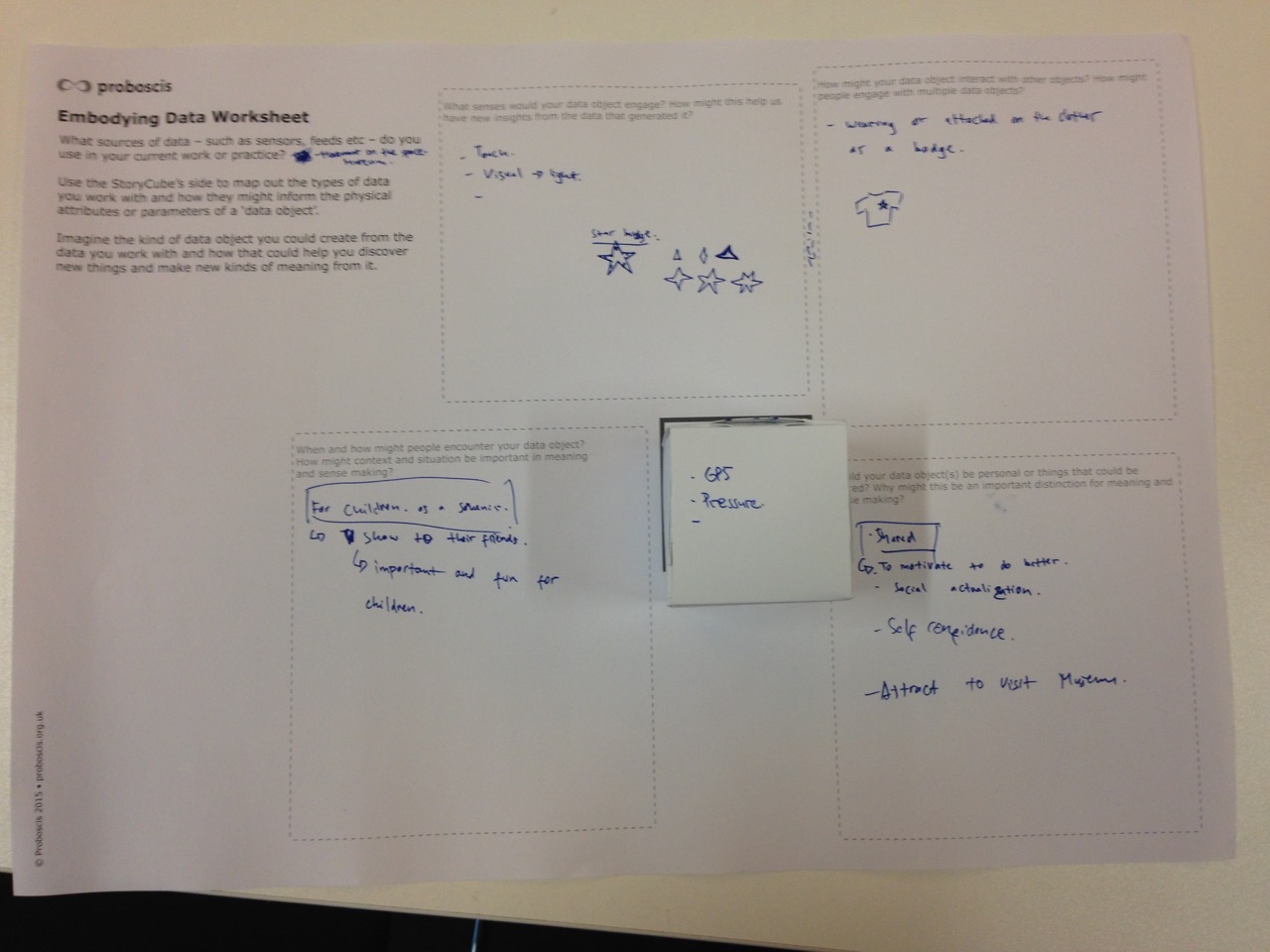
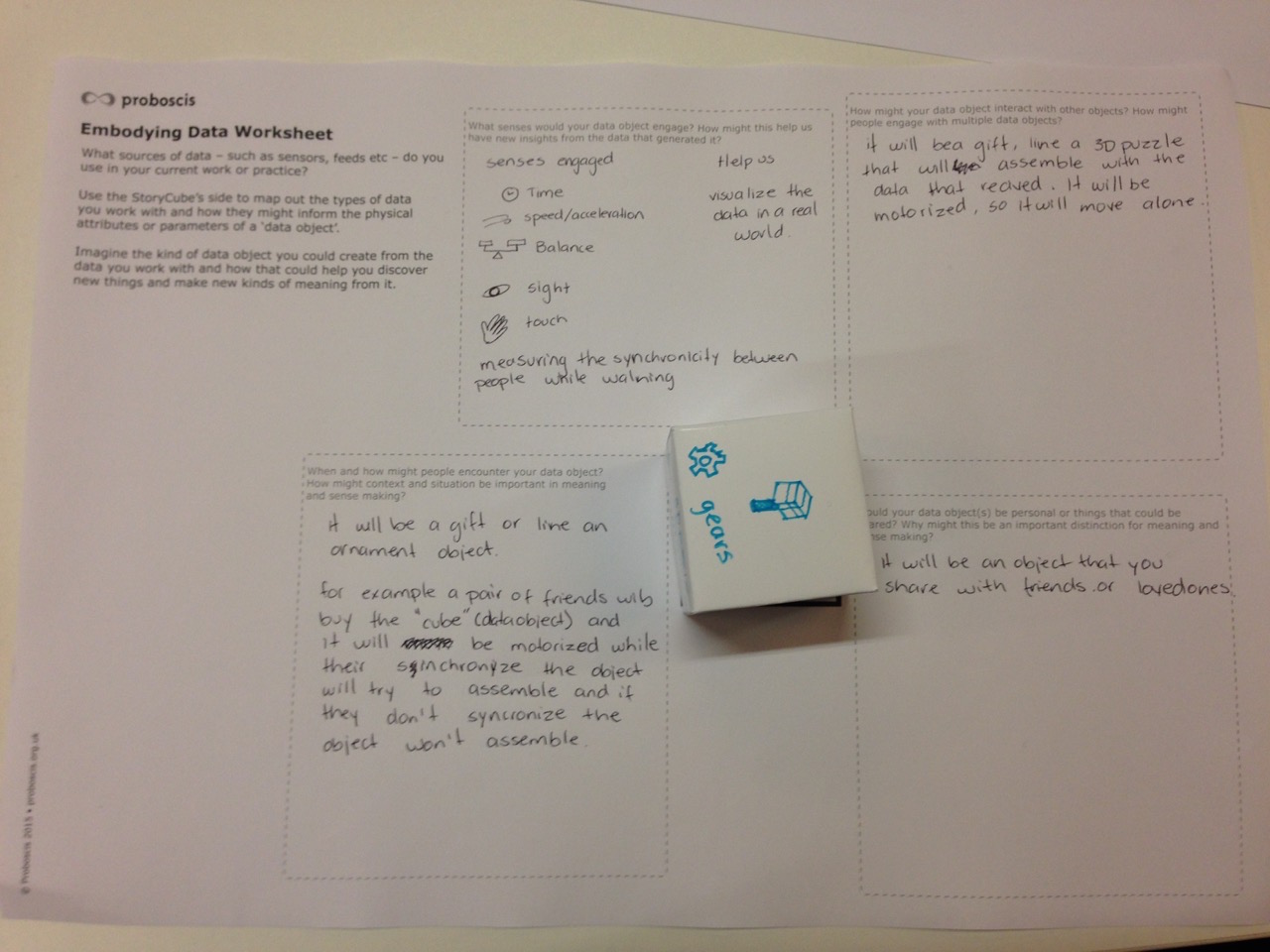
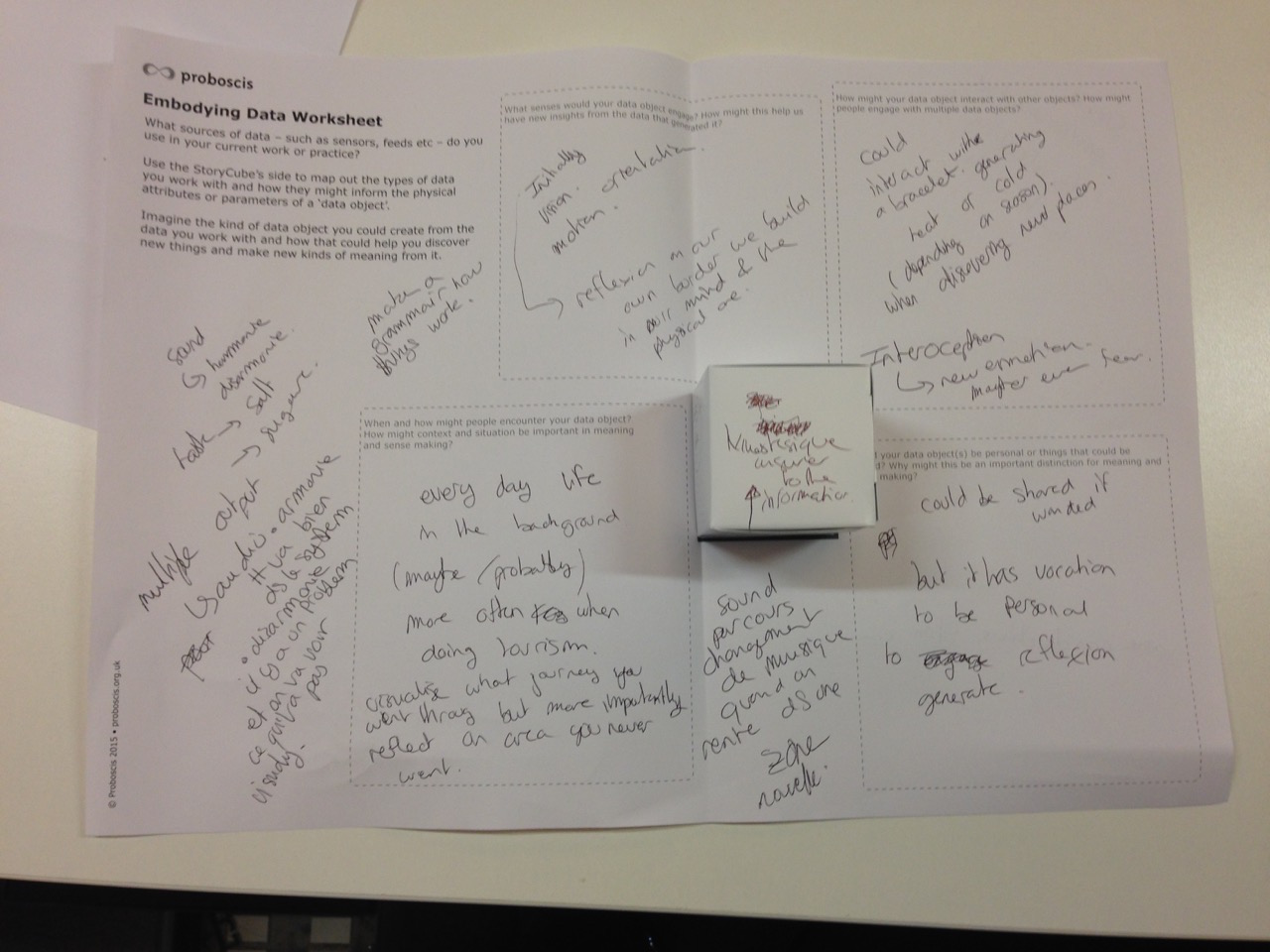
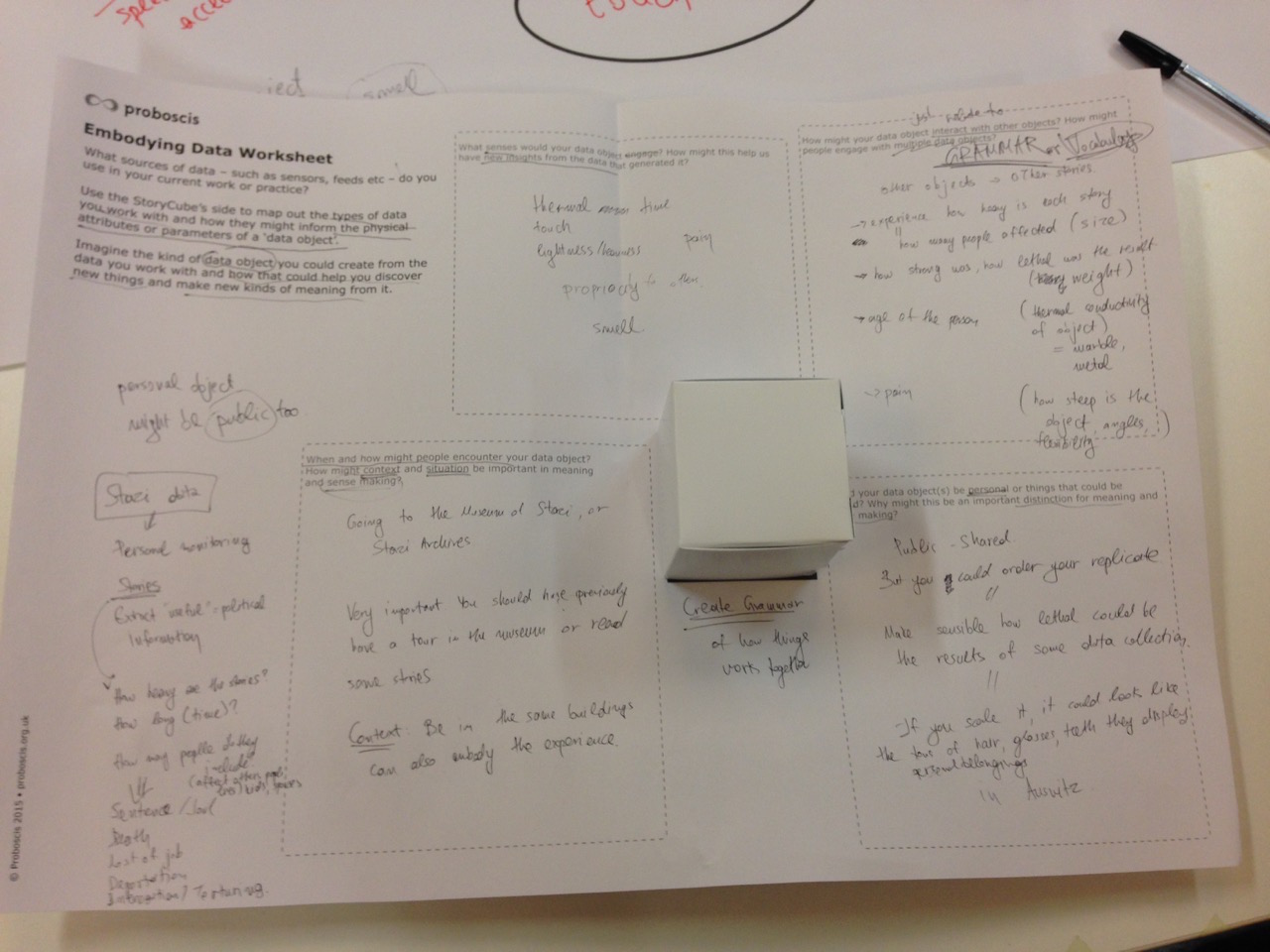
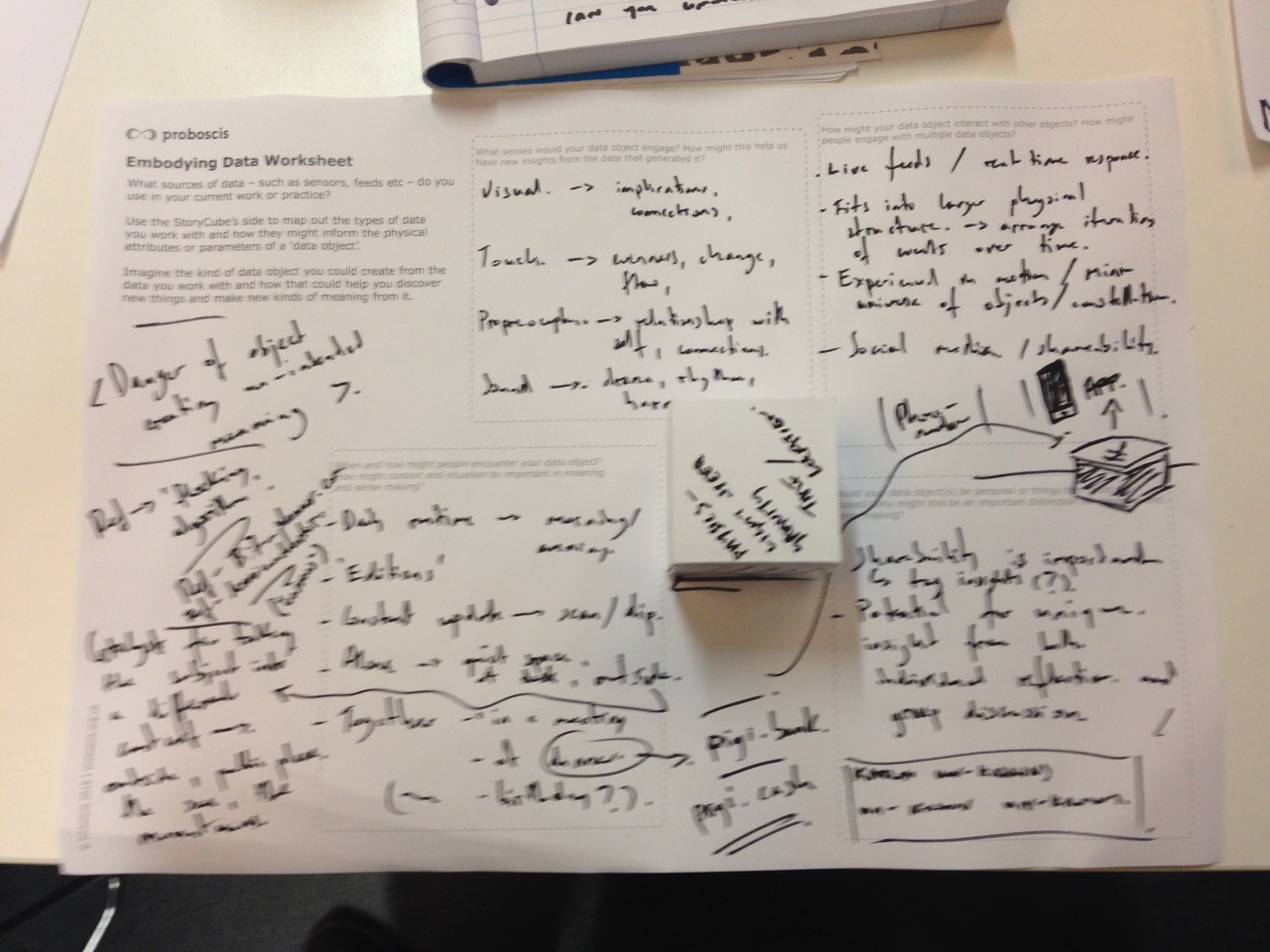
    The second workshop exercise involves each participant using a blank StoryCube to imagine a data object of their own. I encourage them to use the 6 sides of the cube to indicate data types or streams that they might be using in their existing work or projects which could be used to generate a hypothetical data object. Then, placing their cube on a worksheet, the participants are prompted to consider how their data objects would connect with different human senses; how the objects might interact or connect with each other; whether they are personal or shared objects; what kind of conditions might people encounter them in. Participants are encouraged to consider what implications may arise from all these too.

    IMG_2895 IMG_2896 IMG_2897 IMG_2898 IMG_2899 IMG_2901

    Finally we discuss the ideas that have emerged from the exercise and, more generally, the potential for new insights into complex datasets to emerge from creating the possibility for senses other than sight and hearing to be involved in analysis. The point of the co-discovery workshop is to allow participants to come to their own understanding of the potential and what might be possible, not to be didactic. It aims to plant a seed of curiosity by exploring the gaps and absences in our toolkits for creating new kinds of knowledge, hopefully to inspire entirely new ways of expressing data in physical or environmental forms such that we can move beyond the ghetto of the primacy of the screen.

    Further Iterations
    I am available to deliver the workshop to other groups (academic, cultural or corporate). Please contact me for prices and bookings. The workshop lasts about 3 hours, is suitable for a range of abilities and works best with groups of 10 and more. It has been designed to engage scientists at both postgraduate student (Masters/PhD) and professional staff level (lecturer/researcher). It works equally well with designers, artists and others who are also exploring the use of data as a creative material/medium.

  • A Dusting of Snow in Rotterdam and London

    Tonight I will be re-enacting a version of CP Snow‘s famous lecture “The Two Cultures” at V2_ Institute for the Unstable Media in Rotterdam as part of Blowup: New Materials, New Methods.

    Blow Up: New Materials, New Methods from V2_ on Vimeo. [Play from 14:00]

    The Two Cultures” was first given as a Rede Lecture at the University of Cambridge in 1959 and explores what Snow saw as the growing divide between the sciences and the arts (specifically the literary arts). His phrase has become a well-worn cliche often used but rarely read in its original context. Whilst many of the conditions that inspired Snow’s lecture have changed in the intervening half-century, there remain elements which still ring true today – not least in his call for a true integration between the arts and the sciences to address the challenges that humans face in the world.

    I will be repeating my performance alongside V2_ curators Boris Debackere and Michelle Kasprzak at the Craft Council’s Make:Shift conference on Friday November 21st (2.30pm-4.20pm) at Makerversity in Somerset House. This session is presented as an expert meeting on Innovation in Extreme Scenarios – the focus of V2_’s research over the past few years.

  • Reciprocities of Trust

    From Informed Consent to Reciprocal Exchange

    At the heart of working with communities, indeed anyone, is the issue of trust. In this piece I am setting down some of my thoughts about how collaborative practice can be built upon reciprocities of trust and why that is different to some of the established models I have encountered in research and practice stemming from the ethics of informed consent and how they are often applied.

    At the root of how someone behaves is their ethos – not a checklist of ‘ethical guidelines’ to be adhered to, but the fundamental characteristics of who they are as well as why, and how, they do what they do. A person’s ethos is not merely a set of changeable beliefs but the core that directs their actions on both conscious and subconscious levels. If a person’s own ethos is not in alignment with the ‘ethical’ guidelines they are required to follow for a project, then it seems to me that their adherence to an ethical framework and use of informed consent is unlikely to be more than an instrumental procedure that does not necessarily guarantee the reciprocity of trust that is implied.

    In my experience, the mechanisms by which trusted relationships can be established between participants in a project have to be tailored for each specific instance. Sometimes it is possible to use well-honed mechanisms and processes whereby each party can validate the others to establish a basis of trust on which to proceed. In other situations individuals have to build up trust through demonstrations and actions that directly establish their trustworthiness to each other. How we create these kinds of reciprocal relationships is critical to our ability to realise cooperative and collaborative creations of value between people.

    Below are some notes on formulations that trace my own path from informed consent to reciprocal exchange. My reason for writing this is not to suggest that all uses of informed consent are wrong or badly applied, but to articulate and explore my own approaches to formulating something analogous to the rigour of well-applied informed consent that works within the particular contexts of independent engagement practices.

    Informed Consent

    Since first entering the world of academic research in the late 1990s I have become increasingly uncomfortable with the mechanisms and procedures of how I have often encountered ‘informed consent’ being applied. My feeling has always been that the language of ‘informed consent’ tends to pre-suppose a top-down hierarchy, where research ‘subjects’ are studied, acted upon or have information or knowledge extracted from their situation without always the concomitant return. The principle of engaging people in research on an informed and consensual basis is clearly fundamental to any practice that strives to work on an equitable basis. However, often the processes and application of ‘ethics’ appear instrumental and unsound – focused more on limiting institutional liability than truly safeguarding those whose consent has been sought. To me this smacks of an acceptance, even comfortableness, with unbalanced power relations that extract value in one direction only.

    As an artist working independently of (although often in partnership with) institutions I have rarely been subject to the requirement of seeking approval for my work from an ethics committee or having to justify my methods and approach in this way. These structures simply do not exist. In their absence artists and arts organisations have to develop their own idiosyncratic ways of working that reflect ‘ethical’ positions and best practices. As such these are often hard to evaluate because they are not so codified or even designed to be measured in the ways that institutions are obliged to provide evidence of to comply with policies, law and other conventions. Both approaches have much to offer – standards can be agreed upon and evaluated against, whilst the dynamism of more individual and idiosyncratic ethos-driven processes can be more fluid and adaptable to specific situations and contexts.

    In 2008 a four year national programme, Beacons for Public Engagement, involving over twenty UK universities started which sought to address historic imbalances between research culture and the public (and often those being studied) in order to “change the culture in universities, assisting staff and students to engage with the public”. The programme defined engagement as “a two-way process, involving interaction and listening between all parties, with the goal of generating mutual benefit.” Changing attitudes and behaviours within well established systems can only be achieved over long timeframes, therefore it will be interesting to see whether any sustained evaluation of this programme is undertaken, for instance at five or ten year intervals, that may demonstrate not only the value to universities of engaging with the public in mutually beneficial ways, but also to what extent communities have been able to identify and articulate value from such engagement too.

    The emergence of the Free, Prior & Informed Consent (FPIC) model of working with indigenous peoples (and enshrined in 2007’s UN Declaration on the Rights of Indigenous Peoples) is also a hugely significant development along these lines, applicable in the development of trusted relations between any parties where there is a discernible imbalance of power.

    Informed Disclosure

    This concept emerged during the early stages of a collaboration with Dr Lizzie Coles-Kemp on what became the Pallion Ideas Exchange. This project was sited within a deprived ward of the city of Sunderland where, in the face of massive benefits change and the erosion of the welfare infrastructure on which this largely deindustrialised area depends, an intergenerational group of locals had expressed a desire to create their own online ‘knowledge network’ to address the growing lack offered by the State. As we explored with the group what they meant by this, it became apparent that we were looking less at a database of fixed information points and much more at a process of documenting and sharing what people knew and had experiences of that could be shared with others who needed help with specific problems.

    Growing out of the VOME research project led by Lizzie, it was obvious that this process would need to engage with the use of social media as well as the web and mobile technologies at various levels. Among the general issues relating to privacy that affect any use of social media and the internet, there are ofttimes specific reasons where the identification of individuals within localities and communities presents proximate dangers. In Pallion this was an issue that required the close attention of all participants as, either through forgetfulness, ignorance of the potential consequences or a kind of carelessness, there was clearly potential for individuals to experience harm (such as benefits sanctions as well as other issues) as a result of participating or sharing what they knew. Lizzie and I attempted to address this in the project through reiterating a rubric of ‘informed disclosure’ at each workshop and meeting, and building prompts and reminders into the tools we co-designed and created with the group to consider potential consequences before sharing. As part of a generic toolkit which was developed out of this project we also created a visual guide to choosing online services that works as a perception axis between private/public and open/restricted. This was a practical attempt to help someone think through the consequences of choosing and using different online services and social media before adopting them, embedding the concept of informed disclosure at the starting off point as well as along their online journey.

    For me, the principle of informed disclosure went much further than this pragmatic example; it encompassed how my colleagues at Proboscis and I collaborated with Lizzie and her co-researchers as well as the community in Pallion. It meant being open about what we each hoped to achieve from the project, what we were each getting from it as well as what we were each putting into it. It meant being open about our roles as paid professionals engaging with unpaid volunteers in a community that has experienced multiple deprivations since the UK Government agreed to the closure of the key industry in North East England back in the early 1980s – shipbuilding – and the consequent disappearance of the subsidiary industries that relied on it resulting in cross-generational long-term unemployment, loss of skills, hope and aspiration for the future. This kind of openness was crucial to establishing trust and maintaining it not only during the project but long afterwards too.

    Engaged Consent

    Whilst in Reite village in Papua New Guinea with James Leach during November 2012,  James and I wanted to push the concept of informed consent further as we co-designed some initial TEK Notebooks with several community members. This was an initial experiment intended as a proof-of-concept for the discussions we had had with James’ longterm Reite collaborator, Porer Nombo, both before and following our participation in the Saem Majnep Memorial Symposium on Traditional Environmental Knowledge at the University of Goroka in PNG the previous month. A number of the delegates had discussed their approaches to informed consent and working with indigenous people in PNG in their presentations, some of which were really admirable.

    Once in Reite village itself, we felt that it was important to establish what was actually meant by consent in this context – and this then informed how the whole experiment was shaped. The notion of engaging the consent of the participants who filled in the TEK Notebooks was relevant not just to demonstrate our ‘ethical’ approach to outsiders (such as academic and NGO colleagues), but was woven into the nature of the prompts used in the notebooks themselves. The participants were asked not just to give their consent to their notebooks being digitised and shared online, but also to indicate what rights they had to share the knowledge they were including, essentially linking back to the community and heritages of which they are part. This seemed a crucial way to ensure that what was being done was relevant and respectful to the internal relationships of the communities of Reite and Sarangama (a nearby village some of whom also took part). It provided declarations that the kinds of knowledge being shared were not secret or privileged, were given freely and with a description of the author’s right to do so. The prompts themselves emerged out of discussions with a number of community members (in which I was mainly an observer) which provided a strong sense that what we were doing was truly co-created, emerging from a process of open collaboration.

    As a time-limited experiment, our formulation of engaged consent was necessarily only partly developed but points, I think, to how we can do research with people, not just upon them.

    Reciprocal Exchange

    Since completing both the Pallion Ideas Exchange project and following on from my first Indigenous Public Authoring field trip to Reite I have found myself moving more and more towards articulating my personal aim of ‘reciprocal exchange’ with the people and communities with whom I work. My goal in entering into collaborations is to learn from others, experience things I cannot (or would not) make happen on my own – to stretch myself in a continuous process of becoming. It would be a selfish or at least self-centred process without the sense of obligation to reciprocate with others, to offer whatever knowledge, skills and experiences I have in a way that enables others to adopt and adapt them for themselves.

    Perhaps this is why I have often felt uncomfortable with the use of ‘ethics’ and ‘informed consent’ as I have seen and encountered it applied in some research contexts. My research work is not based on creating objective studies so much as engaged directly in working with people to effect social and cultural transformation. For this I believe that more is needed than just consent – it requires active participation, mutual trust and reciprocal exchange.

    This value of reciprocal exchange also underpins the work I have been doing with Oxford Brookes University on developing a process of engaged participatory design for a new kind of rehabilitation measurement tool which survivors of traumatic brain injury (TBI) will be asked to use to share their rehab experiences. Previous methods and tools have primarily focused on what clinicians and researchers needed to know. However we have started from the point of also trying to understand what benefits may derive from the activity for the TBI survivors themselves – as they see it – and how the process of contributing information to help clinicians better understand their experiences can be part of their own rehabilitation. This is a challenging step in developing tools within a medical context – embedding the patient’s perspective at the heart of designing a process intending to learn from their information and data is not as common as many may think.

    * * * * *

    James and I are now gearing up for the next stage of our Indigenous Public Authoring collaboration : a field trip in early 2015 (and another in 2016) back to Reite to work further with community members and explore methods and tools appropriate to their situation and context – ultimately aiming to put together a kind of simple, adaptable toolkit and process for recording and sharing traditional environmental, cultural and ecological knowledge that has been co-designed and co-created in situ with the community.

    At the heart of this project, for me, is this question of reciprocal exchange – what is each participant in the process bringing and taking away? How does it bind us into relationships of exchange and obligation to each other? The disparities of our ways of life and the worlds we inhabit mean that establishing an equitable relationship is unlikely to be based purely on material exchange – as it might be in the industrialised world of goods and money – although undoubtedly this will be involved. More likely, it seems to me, an equitable relationship will emerge out of shared acceptance of obligations to each other, and the articulation of these obligations through processes of collaboration and making things.

    And the only material that these relationships can be forged with is trust.

  • Tender Shoots

    Today my new role got under way as a Creativeworks Entrepreneur in Residence in School of Computer Science and Information Systems at Birkbeck University of London. Over the next three months I’ll be collaborating with George Roussos, Professor of Pervasive Computing in a very different way to how we’ve worked before (we collaborated on a couple of projects back in 2006 and 2008). This time we don’t have a specific project in mind, rather we have structured the residency as a way of embedding me within the department to bring some of my concepts and methods into the mix of practices already being used by staff and students. Specifically we are focusing on ideas around “data manifestation” and “embodying meaning” emanating from the Lifestreams project I led with Stefan Kueppers (in collaboration with Philips Research) – i.e. introducing some radical and dynamic ways of thinking about the nature of how we interact with “data” and computation.

    This rather elegantly complements the other strands I have been developing and working on this year. A few months ago I was made an Honorary Research Associate of the ExCiteS research group at UCL, where I am collaborating with Professor Muki Haklay and Dr Jerome Lewis on exploring new ways of recording and sharing indigenous forms of knowledge for forest peoples. This is itself an extension of my ongoing collaboration with anthropologist Professor James Leach (University of Western Australia/CNRS Marseille) on indigenous knowledge documentation and sharing in Papua New Guinea with the people of Reite. James and I have recently been awarded funding from the Christensen Fund to continue our work in PNG over the next two years.

    There are also very interesting cross-cutting currents with the project I have been consulting on this summer for Professor Helen Dawes in the Movement Science Research group at Oxford Brooke’s University. They are developing a Rehabilitation Tool to assist survivors of Traumatic Brain Injury in documenting and sharing their experiences of rehabilitation. I have been helping them devise a strategy for developing such systems from scratch to include not just the clinical and medical research perspectives, but fundamentally the ‘patient’ or TBI survivor’s perspective too. This is part of a large EU project, CENTER-TBI, so part of our work is in thinking about the implications for designing something that could potentially be rolled out across 28 countries and many languages, on top of the multifarious cognitive and physical disabilities that TBI survivors typically endure.

    This last year has been a challenging shift for me, from being wholly focused on leading Proboscis and devising projects around a team of people with different talents and skills, towards a new horizon based on my own practice and how I can work personally with others. Its taken quite a while to pull enough things together to feel like I’m on solid ground again – and there are other irons in the fire that I’m hoping will begin to take shape over the next few months. I hope to be sharing more exciting projects and news as the year progresses.

  • Pioneering versus Leadership

    Recently I’ve had several conversations with friends and colleagues touching on the differences between being a pioneer and being a leader. There have always been support structures for aspiring leaders in many different fields and sectors, but there seems to be very little support for pioneers. Is it because, often being disruptive and maverick, they make other people uneasy? Or perhaps because what they do does not always bring a direct return on investment for sponsors and funders?

    One analogy I have been thinking of is that of a ship. Ships require different specialists to fulfill diverse tasks: from engineering, victualling, cooking, communications, maintenance to management. Among these, it is the navigator or pilot’s task to navigate the ship, whilst the captain’s role is to direct the whole crew and be responsible for the ship and its integrity. The navigator must plot a safe course for the ship, earning the trust of the crew and captain that their experience, skill and nous will carry them all safely. I imagine that navigators have to combine heterogeneous skill sets and knowledges – such as weather/meteorology, geography/hydrography, tidal patterns, the mathematics of bodies/mass and movement among other things – to achieve the right synthesis of conditions for their task. I think this is very much like the kind of trans- or interdisciplinary approach that helps foster invention and innovation. Its not for everyone but can be extremely rich and rewarding for those who do participate.

    I believe that pioneers are also just the kind of people with the skills to navigate uncharted territories. They survey and map out new territories that are often then colonised – farmed, made productive perhaps – by others who follow in their wake; by which time the pioneers have most likely moved on to new spaces. Leaders could be described as those who stay and organise the territory and the activities that take place within it. It’s this qualitative difference that separates pioneering from leading: leaders work within established frameworks whilst pioneers explore the potential for entirely new structures and frames that don’t yet exist.

    What then is the value to society of people who pioneer? How can societies value and appreciate the kind of deferred return on investment that pioneers bring? Is it possible, or even desirable, to nurture pioneers with programmes like those that support those aspiring to leadership roles? Or perhaps, is it too much to ask society to feed the restless nature of those questing souls for whom any structure, in the medium to long term, is probably going to feel irksome?

    The question is not an idle one: looking back over my own work of the past two decades there has been a strong element of pioneering in both projects and processes. Some of the projects and concepts I have developed have anticipated mainstream activities, but too far in advance to really reap any benefit from our prescience that could be reinvested in new work. How does one explain, or even demonstrate, the value of this deferred return to funders, sponsors or investors who are increasingly demanding direct returns on investment for the same kind of pioneering work?

    There remains a contradiction or tension between wanting to be recognised and rewarded for being so ahead of the field alongside the frustration that people simply don’t understand where you’re trying to taking them. I suspect it comes down to temperament and character, an inexorable drive that just can’t be laid aside.

  • On Public Agency

    For some time now I have been engaged in a process of transforming my way of life and ways of working. In doing so I have continued to muse on the problem of communicating to others what it is that I do. I have never felt entirely comfortable describing myself as an artist, nor as a designer, nor as a researcher nor any other one thing (they never quite seem enough). And it is such a mouthful to always have to say that I am an “Artist, Designer and Researcher” (my long time favourite personal soubriquet, “maker of mischief”, is also not always suitable for attracting potential sponsors, funders and clients when trying to earn a living). I have been pondering on the nature of who and what I am as much as what it is that I do, and in doing so I’ve begun to think of a description that encapsulates my aspirations as much as the way I work across a variety of fields and disciplines.

    What drives me is my fiercely independent desire to enact and enable conditions for change : to co-create and co-design processes that help other people to feel empowered to assume agency for themselves. As a counterpoint to the many kinds of agent who are empowered by the state (and increasingly by private interests and corporations) to act on their behalf, I feel that our society also needs people to act as self-determined public agents for the public good. Citizenship could well be conceived as how far we are actually able to be autonomous beings, empowered and acting with agency not just acted upon by those we continually devolve power and agency to (politicians, agents of the state as well as the often faceless machinations of bureaucracies and big business).

    Such a role would combine the capacity for visionary thinking with the ability to observe, analyse and interpret the conditions we inhabit and with the ability to design tools, processes and solutions for action. It would be animated by a conscious ethos clearly set out and shared, not straitjacketed by moralistic codes of conduct. It would have to be fluid, flowing around obstacles and changing with the landscape without altering its essential nature.

    I’m not enough of a writer or speaker to consider myself a public intellectual and I have never been an activist nor attracted to activism per se, so I don’t see this role as being quite the same as those, despite being founded on a clear ethos of working for the public good and sharing many commonalities. I’m more of a pioneer than an entrepreneur and, whilst I’ve always been attracted to analysing problems and devising solutions, I’m not enough of a scientist or a detective to be a consulting …, well, what exactly?

    In my practice over the past two decades I have often framed the bigger picture, devising the overarching strategies that bring together all the elements (people, resources, organisations etc), whilst leaving some of the tactical decisions to those better able to make them at the point of need. I’ve blended this with designing and making tools and techniques; creating ways to express and share ideas, insights, observations and discoveries; creating spaces and facilitating collaborations between unusual or unlikely partners; and creating opportunities for others. In the role of transdisciplinary and disruptive innovator I have sought to introduce artistic practice into unfamiliar and unorthodox situations as a means to achieve uncommon insights. This kind of delicate interplay between people coming from all kinds of backgrounds leads me to think think that the role of the public agent might be contrapuntal to those sanctioned for itself by the state (or other institutions) – neither in opposition nor antagonistic, but interwoven as a separate melody within the whole musical structure of state, private interests and the public.

    Some aims a public agent may have could include,

    • to seek intelligence on the forces that act upon the public and make transparent that which is obscured;
    • to analyse and interpret the conditions of society and culture to enable reflection and realisation;
    • to act for change that empowers people to assume agency for themselves by helping to design tools, processes and situations that enable this;
    • to act consistently within the frame of a stated ethos, but not to be above employing subversion and subterfuge in achieving their goals;
    • to remain fiercely independent whilst constantly collaborating with others… alert to attempts at co-option and resilient enough to engage constructively with people and entities that may not be working for the public good themselves;
    • to never be afraid to change yourself, or to go into unfamiliar or uncomfortable places and situations, or to simply be when action is not needed or possible.

    This concept of the public agent is very much a work in progress, indicative of my current thinking rather than a definitive statement of intent. In fact the modest contribution I have made to the public good is probably not enough to have earn’t me the right to style myself as a public agent but it remains what I aspire to achieve. There are, indeed, many other people who have a far better claim to being a public agent than myself, people whose examples shine through as beacons of inspiration and hope.

    Over the past few days I’ve had an opportunity to discuss some of these ideas with other participants at Blast Theory’s Act Otherwise seminar which has reinforced my sense that artists and artistic practice have a special place in our society for working in this way. It is not so much an obligation or responsibility as a really exciting challenge to live up to. That so many others, in their own ways, share that excitement and commitment to making positive change makes all the difference, reinforcing the feeling that it is an effect of community not just individuality.